
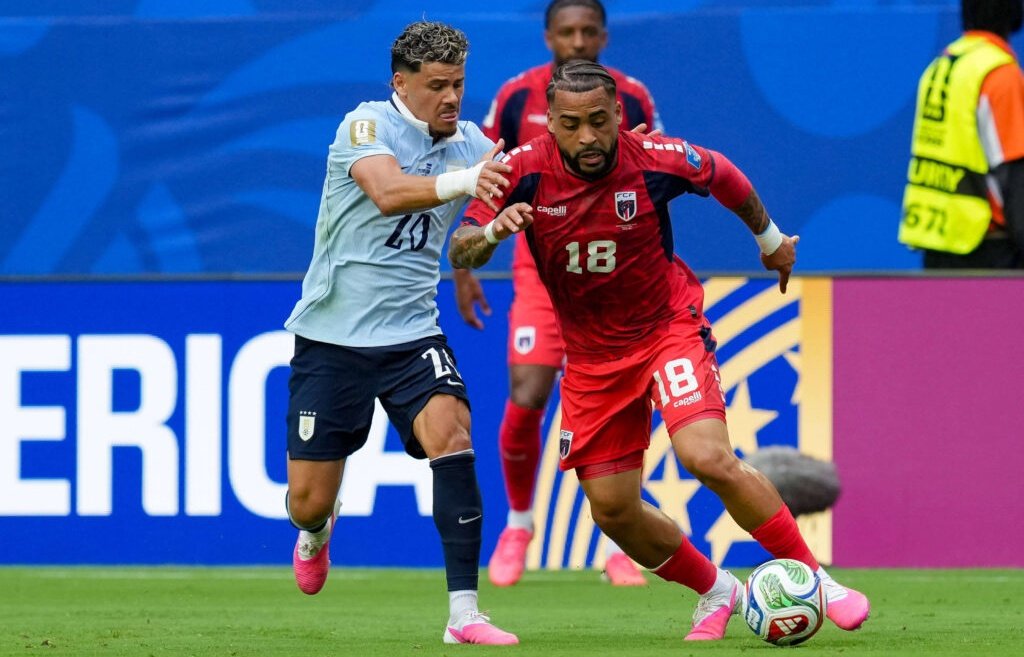
Miami Stadium, Florida – In a pulsating Group H clash at the FIFA World Cup 2026™, Uruguay and Cabo Verde played out a captivating 2-2 draw that showcased the very best of international football’s unpredictability. The match, played under the warm Miami sun, featured stunning goals, dramatic momentum shifts, and a display of attacking football that kept the 65,000-strong crowd on the edge of their seats until the final whistle.
First Half: Uruguay’s Early Dominance
The match began with Uruguay asserting their authority through their characteristic possession-based football. The two-time world champions controlled the early proceedings, with Federico Valverde orchestrating play from midfield and creating numerous opportunities for the attacking trio.
Uruguay’s pressure finally paid off in the 21st minute when Kevin Pina opened the scoring with a clinical finish. The goal came after a sustained period of possession, with the midfielder latching onto a perfectly weighted through ball before calmly slotting past the Cabo Verde goalkeeper. The strike sent the Uruguayan supporters into raptures and seemed to set the tone for what many expected to be a comfortable victory.
However, Cabo Verde refused to be intimidated. The African nation, appearing in only their second World Cup, showed remarkable resilience and tactical discipline. Their defensive organization frustrated Uruguay’s attackers, while their counter-attacking threats began to trouble the South American defense.
Cabo Verde’s Response
Just before the halftime whistle, Maxi Araujo doubled Uruguay’s lead in the 44th minute with a moment of individual brilliance. The winger cut inside from the left flank, evaded two defenders with clever footwork, and unleashed an unstoppable strike into the top corner. It seemed Uruguay would head into the break with a comfortable two-goal cushion.
But in a dramatic twist of fate, Agustin Canobbio added a third for Uruguay deep into first-half stoppage time (45’+6′), converting from close range after a goalmouth scramble. At 3-0, the match appeared all but over, with Uruguay cruising toward what seemed an inevitable victory.
Second Half: The Cabo Verde Comeback
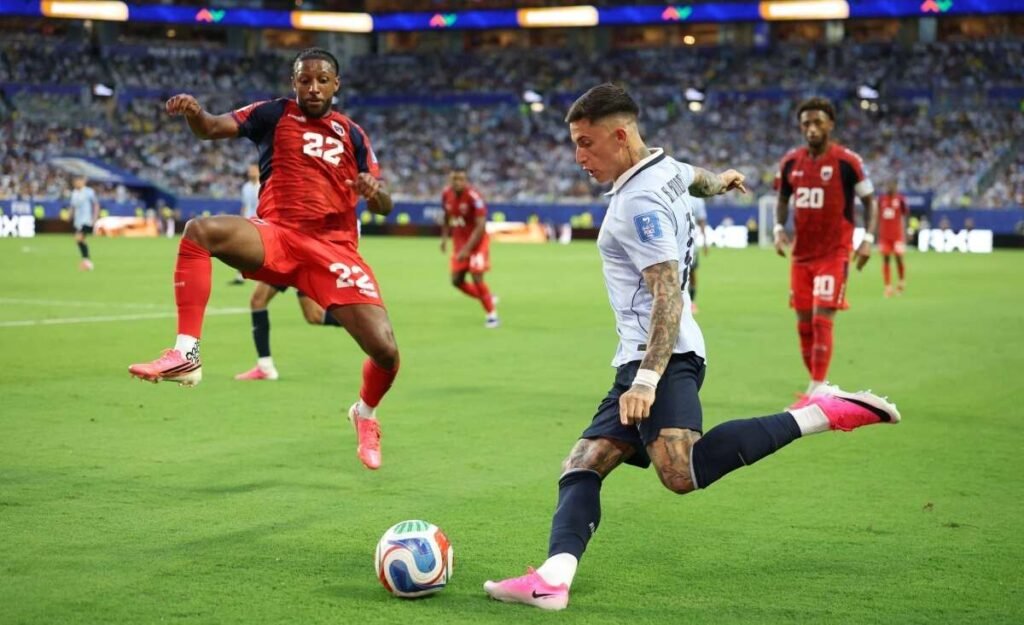
Whatever Cabo Verde manager Bubista said during the halftime interval worked wonders. His team emerged with renewed purpose and intensity, immediately putting Uruguay’s defense under pressure. The comeback began in the 61st minute when Helio Varela pulled one back with a spectacular strike from outside the penalty area. The midfielder collected a loose ball 25 yards from goal and unleashed a thunderous drive that flew past the Uruguayan goalkeeper before he could react.
The goal breathed new life into Cabo Verde, who suddenly believed they could salvage something from the match. Their high-pressing game began to unsettle Uruguay, forcing errors from a defense that had looked so composed in the first half.
A Stunning Equalizer
The pressure told in the 78th minute when Kevin Pina completed his brace with a composed finish after a swift counter-attack. The midfielder, who had been Cabo Verde’s standout performer throughout the match, timed his run perfectly to meet a cross from the right flank and guided his header past the stranded Uruguayan goalkeeper.
The equalizer sent the Cabo Verde supporters into delirium, while the Uruguayan players looked shell-shocked at how their comfortable lead had evaporated. The momentum had completely shifted, and it was now the African nation pushing for a dramatic winner. (Source: fifa.com)
Goal Scorers
| Time | Scorer | Team |
|---|---|---|
| 21′ | Kevin Pina | Cabo Verde |
| 44′ | Maxi Araujo | Uruguay |
| 45’+6′ | Agustin Canobbio | Uruguay |
| 61′ | Helio Varela | Cabo Verde |
The closing stages of the match were frenetic, with both teams creating chances to snatch all three points. Uruguay, desperate to avoid a damaging draw, threw men forward in search of a winner. Darwin Núñez came closest, forcing a brilliant save from the Cabo Verde goalkeeper in the 85th minute, while the woodwork denied Valverde in stoppage time.
Cabo Verde, meanwhile, looked dangerous on the break, with substitute Jovane Cabral causing problems with his pace and dribbling. However, both sides ultimately had to settle for a share of the spoils in a match that will be remembered as one of the tournament’s most entertaining encounters.
Match Statistics Analysis
| Statistic | Uruguay | Cabo Verde |
|---|---|---|
| Possession | 54% | 33% |
| Passes Completed | 444 | 218 |
| Total Attempts | 17 | 12 |
| On Target | 2 | 4 |
| Off Target | 13 | 3 |
| Assists | 1 | 0 |
| Corners | 11 | 4 |
| Free Kicks | 4 | 13 |
| Yellow Cards | 2 | 2 |
| Red Cards | 0 | 0 |
| Fouls Against | 11 | 4 |
| Offsides | 3 | 0 |
The statistics paint a fascinating picture of the contest. Uruguay dominated possession with 54% of the ball, completing 444 passes compared to Cabo Verde’s 218. The South Americans also created significantly more chances, registering 17 attempts at goal with only 2 on target, while Cabo Verde managed 12 attempts with 4 on target.
Interestingly, all four goals came from different areas of the pitch. Uruguay’s two strikes originated from inside the penalty area, while both Cabo Verde goals came from outside the box. The African side’s attacking efficiency was remarkable, converting 33% of their on-target attempts into goals.
Uruguay’s set-piece dominance was evident from the 11 corners they won to Cabo Verde’s 4, and the 27 crosses compared to just 8. However, the African nation showed greater discipline defensively, committing only 4 fouls compared to Uruguay’s 11.
The match saw a total of 2 yellow cards for each team, with Uruguay’s Luis Suárez and José María Giménez receiving cautions, while Cabo Verde’s Kenny Santos and Julio Tavares also entered the referee’s notebook.
Post-Match Reactions
Uruguay’s manager Marcelo Bielsa expressed his frustration at his team’s inability to close out the match. “We controlled the game for 60 minutes and should have been out of sight,” he said in his post-match press conference. “Cabo Verde showed great character to come back, and we must learn from this. In tournament football, you cannot switch off.”
Cabo Verde’s hero Kevin Pina was understandably delighted with his two-goal performance. “This is a historic result for our country,” Pina said. “To come back from 3-0 down against a team like Uruguay shows the spirit and quality we have. We believed in ourselves, and we were rewarded.”
Group Implications
The draw leaves Group H finely poised heading into the final round of matches. Both teams remain in contention for qualification to the knockout stages, with the result keeping Cabo Verde’s hopes of reaching the Round of 16 alive. For Uruguay, the dropped points represent a missed opportunity to take control of the group, and they now face a potentially nervous final group match.
Cabo Verde’s performance will send a message to the rest of the tournament that they are not simply making up the numbers. Their resilience, tactical discipline, and clinical finishing have established them as genuine contenders for a place in the knockout stages.
Looking Ahead
Both teams will need to regroup quickly as they prepare for their final group stage fixtures. Uruguay must rediscover the defensive solidity that characterized their first-half performance while maintaining their attacking threat. Cabo Verde, buoyed by this result, will approach their final match with renewed confidence and belief that they can make history by reaching the knockout stages.
This thrilling encounter at Miami Stadium will be remembered as one of the standout matches of the 2026 World Cup group stages. It showcased everything that makes football the beautiful game: drama, passion, individual brilliance, and the never-say-die spirit that defines tournament football. The 2-2 draw was a result that neither team deserved to lose, and both sets of supporters will hope their teams can build on this performance in the matches to come.
FIFA World Cup 2026 Match Schedule & Group Table are here.