
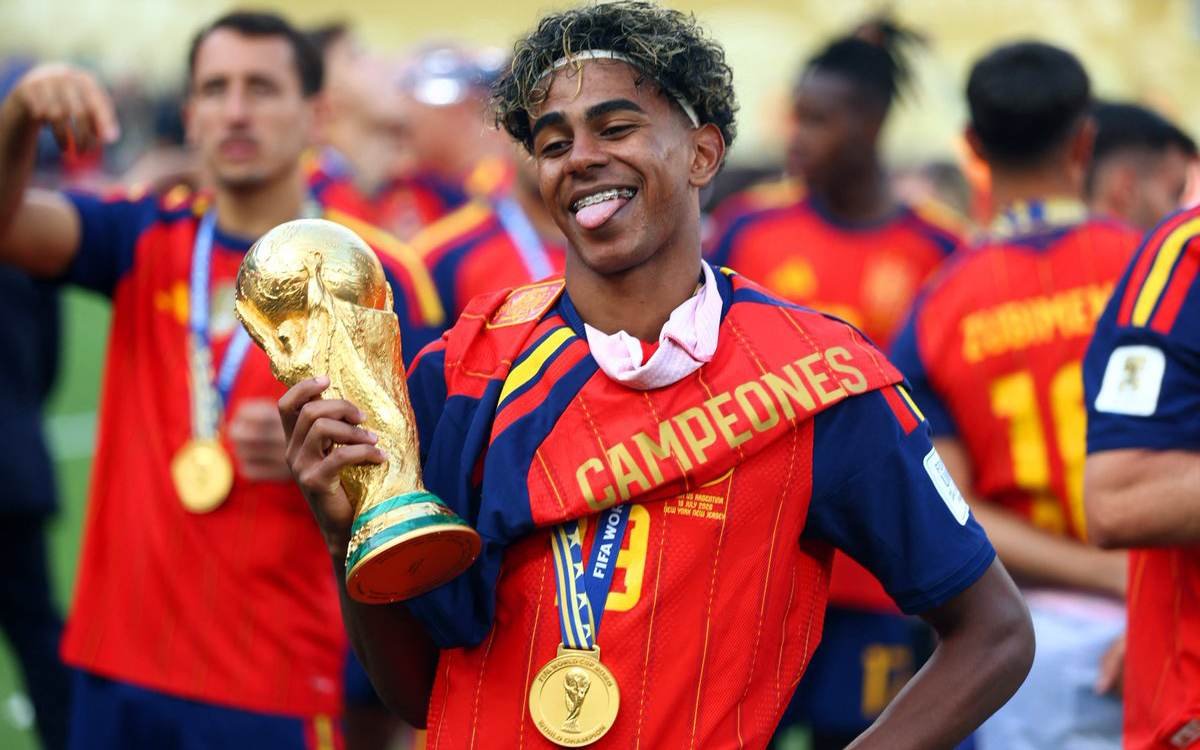
The FIFA World Cup 2026 will forever be remembered as a tournament that shattered conventions, broke records, and delivered moments of sheer sporting brilliance. From its unprecedented scale to its dramatic finale, this was truly a World Cup of firsts.
Medal Tally (Top 3)
| Team | Medal |
|---|---|
| Spain | Gold (Champions) |
| Argentina | Silver (Runners-up) |
| England | Bronze (Third Place) |
For the first time in history, the World Cup expanded to 48 teams, spreading across three host nations: Canada, Mexico, and the United States. The tournament featured 104 matches across 39 days more than any previous edition and introduced the inaugural Round of 32 knockout stage, adding another layer of drama to the world’s greatest sporting event.
Fans flocked to stadiums in unprecedented numbers, with a staggering 6,810,966 attendees breaking the previous record of 3,587,538 set at USA 1994. The atmosphere was electric from coast to coast, as North America proved itself capable of hosting a tournament of historic proportions.
A Final for the Ages
The tournament reached its crescendo at New York New Jersey Stadium on July 19, 2026, where Spain and Argentina faced off in a title showdown that will be talked about for generations. Before a single ball was kicked, history was already being made with the first-ever World Cup Final Halftime Show, featuring co-headliners Madonna, Justin Bieber, Shakira, and BTS delivering awe-inspiring performances.
When the football began, it was Spain who emerged victorious in a match that showcased the very best of international football. Ferran Torres etched his name into history with the match-winning goal in the 106th minute of extra time, echoing Andres Iniesta’s decisive strike in Spain’s 2010 World Cup final victory though Torres’ effort came ten minutes earlier in the extra-time period.
Individual Award Winners
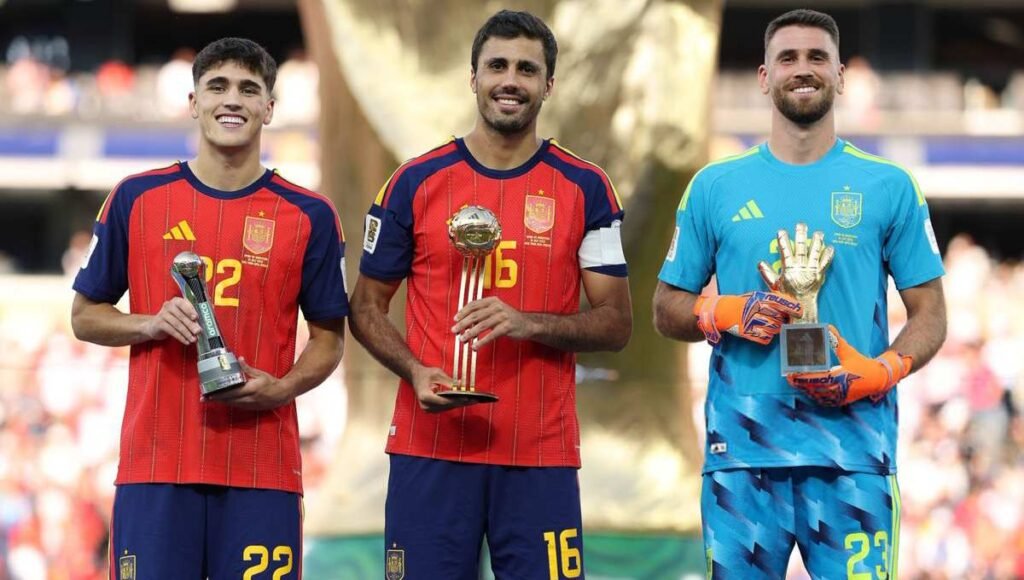
| Award | Player | Country |
|---|---|---|
| Golden Ball | Rodri | Spain |
| Silver Ball | Lionel Messi | Argentina |
| Bronze Ball | Kylian Mbappé | France |
| Golden Boot | Kylian Mbappé | France |
| Golden Glove | Unai Simón | Spain |
| Young Player | Pau Cubarsí | Spain |
Spain’s Golden Generation
La Roja completed their charge to glory with seven successive victories, a remarkable achievement that places them second only to Brazil’s 11-match winning streak spanning 2002 to 2006. But Spain’s triumph was about more than just results it was about dominance in every aspect of the game.
Rodri, the midfield metronome, claimed both the adidas Golden Ball and shattered his own passing record by completing 790 passes the most ever registered by a player at a World Cup. His composure and vision were instrumental in Spain’s success.
Unai Simón was awarded the adidas Golden Glove after a tournament of commanding performances between the posts, while 17-year-old sensation Pau Cubarsí claimed the FIFA Young Player Award, signaling a bright future for Spanish football.
Records Tumble Across the Tournament
The 2026 World Cup was a tournament of extraordinary individual and collective achievements:
308 goals were scored in total, setting a new tournament record. Kylian Mbappé led the scoring charts with 10 goals, securing the adidas Golden Boot. Only Just Fontaine (13 in 1958) and Sándor Kocsis (11 in 1954) have scored more in a single edition.
Lionel Messi, in what many believe was his final World Cup appearance, claimed the adidas Silver Ball, while Mbappé’s consolation was the Bronze Ball in addition to his Golden Boot.
Historic Milestones Beyond the Pitch
Spain’s victory carried profound significance beyond the trophy itself. The Spanish squad became the first nation to simultaneously hold both the men’s and women’s World Cup titles an achievement that underscores the country’s footballing dominance in the modern era.
In another historic first, Spain’s winning squad were presented with championship rings alongside their gold medals, adding a unique piece of memorabilia to their collection. (FIFA)
England’s Bronze and Other Stories
England secured third place with a hard-fought bronze medal match victory, continuing their steady progression on the international stage. Meanwhile, Egypt finally ended their 92-year quest for a first World Cup win, defeating New Zealand 3-1 in Vancouver a moment of pure joy for the Pharaohs and their supporters.
Curaçao’s Eloy Room produced one of the tournament’s most remarkable individual performances, making 16 saves in a goalless draw against Ecuador. His heroics equaled Tim Howard’s record from USA’s extra-time loss to Belgium at Brazil 2014, but achieved in regulation time an even more staggering feat.
A Legacy for the Ages
The 2026 World Cup will be remembered as a tournament that dared to be different. From its expanded format to its historic halftime show, from record-breaking attendance to unforgettable individual performances, this was a World Cup that pushed boundaries and created memories that will last a lifetime.
Spain emerged as worthy champions, their blend of technical excellence, tactical discipline, and mental fortitude proving too much for even the great Lionel Messi and his Argentine side. As the confetti fell on New York New Jersey Stadium, the football world witnessed not just a tournament winner, but a new standard for what a World Cup can be.
For Spain, the journey from 2010 to 2026 has been one of evolution and sustained excellence. For the sport, this World Cup has shown that expansion and innovation can coexist with the drama and quality that make football the world’s game.
The 2026 World Cup was a celebration of football’s global reach, its capacity for surprise, and its power to unite nations. In a tournament of firsts, Spain proved that some things remain constant the pursuit of excellence, the thrill of victory, and the enduring magic of the World Cup.