
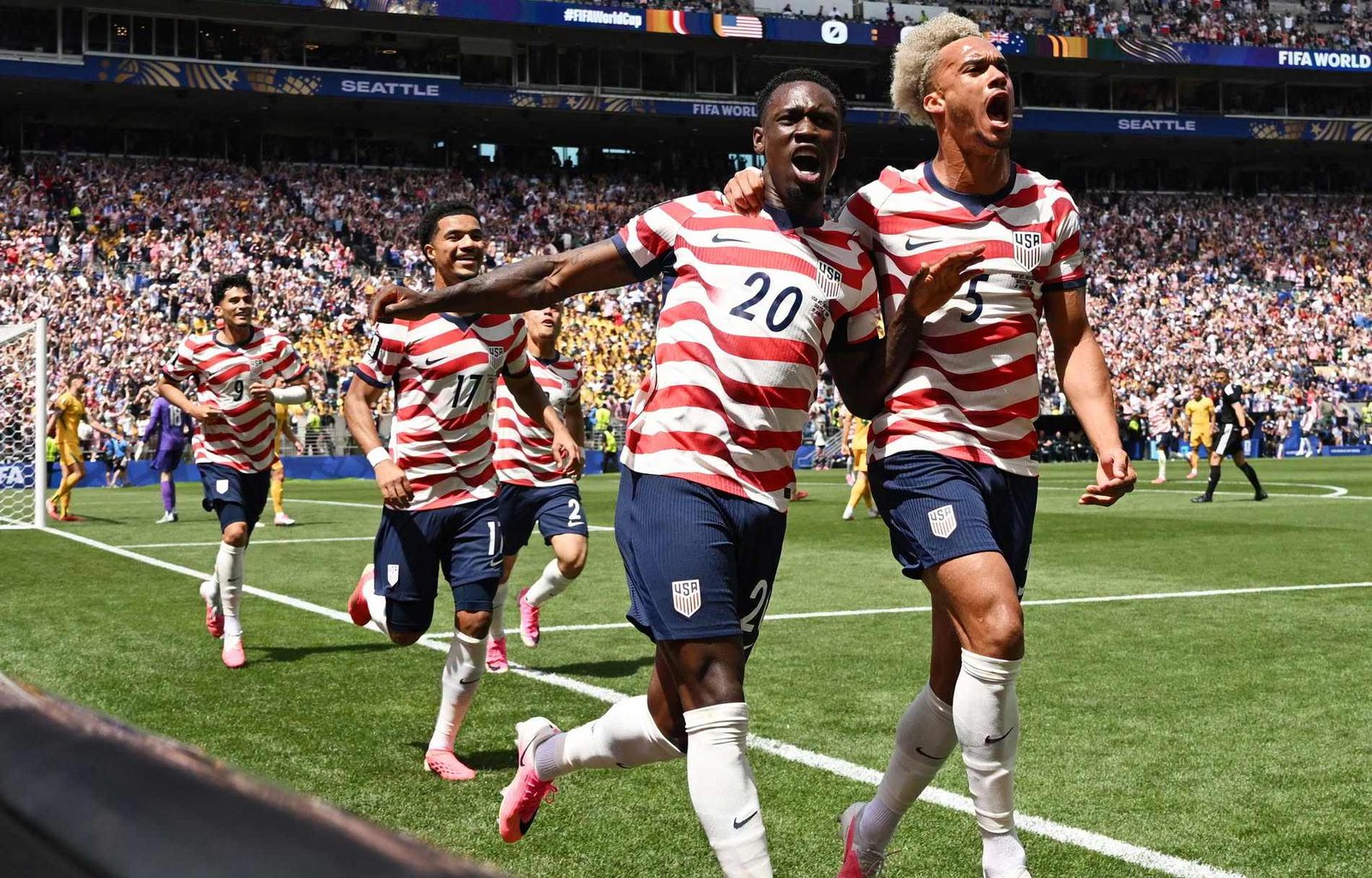
SEATTLE, Washington — The United States men’s national team delivered a commanding performance at Seattle Stadium on Saturday, defeating Australia 2-0 in a pivotal Group D encounter at the FIFA World Cup 2026™. The victory puts the Americans in strong position to advance from the group stage, while Australia faces an uphill battle to keep their knockout round hopes alive.
First Half: Burgess Blunder Opens the Floodgates
The match took an unexpected turn in the 11th minute when Australian defender Cameron Burgess inadvertently redirected the ball into his own net. The own goal, credited to Burgess, came from a dangerous American cross that forced the Socceroos center-back into a desperate intervention under pressure.
“That’s the worst feeling for a defender,” said former Australian international Mark Bosnich during the broadcast. “You’re trying to do your job, and one moment of misfortune changes the entire complexion of the match.”
Despite the early setback, Australia showed resilience, managing to keep the scoreline at 1-0 through the remainder of the first half. However, their defensive organization was repeatedly tested by a relentless American attack.
Freeman Seals the Deal
Just before the halftime whistle, Alex Freeman doubled the American advantage with a well-taken goal in the 43rd minute. The strike came from inside the penalty area, catching the Australian defense off guard and giving goalkeeper Mathew Ryan little chance to react.
Freeman’s goal proved to be the dagger, as the United States controlled the tempo throughout the second half, effectively neutralizing any Australian comeback attempts.
Tactical Masterclass from the Stars and Stripes
The statistics tell a story of American dominance. The United States enjoyed 55% possession compared to Australia’s 30%, with 15% of the ball being contested in open play. The Americans attempted 531 passes with an impressive 87.6% completion rate, while Australia managed just 308 passes with a 77.3% completion rate.
The attacking metrics were particularly telling. The US generated 10 total attempts at goal, with two finding the target and three off target. While Australia matched the Americans with two shots on target from just five total attempts, their offensive output was significantly less threatening overall.
The Americans also dominated line breaks, completing 121 of 186 attempted compared to Australia’s 74 of 135. This indicated a far more progressive passing game that consistently bypassed Australian defensive lines. (Source: FIFA)
Defensive Solidity and Discipline Concerns
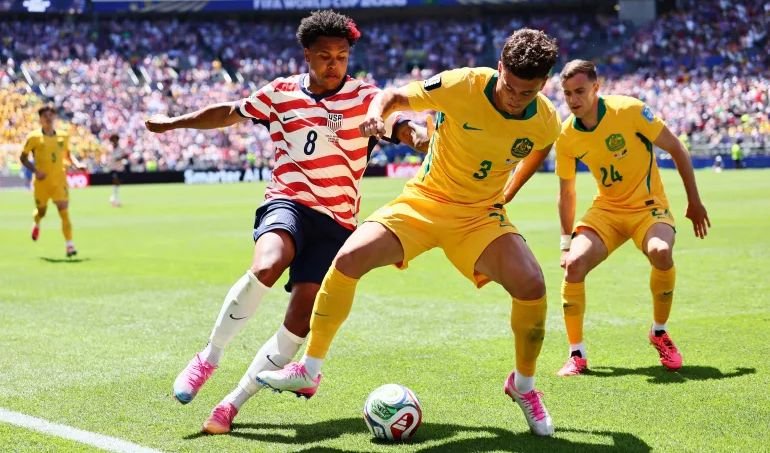
While the scoreline suggests defensive perfection, both sides showed vulnerability to discipline issues. The United States received three yellow cards, while Australia picked up four cautions. The Australians committed 16 fouls against the Americans’ 12, suggesting a slightly more aggressive approach that ultimately proved counterproductive.
“We knew they would be physical,” said US head coach Gregg Berhalter after the match. “The key was to stay composed, keep our shape, and exploit the spaces they left open.”
Extended Match Statistics
| Category | USA | Australia |
|---|---|---|
| Possession | 55% | 30% |
| Assists | 0 | 0 |
| Total Shots | 10 | 5 |
| Shots on Target | 2 | 2 |
| Shots Off Target | 3 | 3 |
| Passes | 531 | 308 |
| Crosses | 15 | 20 |
| Corners | 7 | 4 |
| Free Kicks | 16 | 13 |
| Yellow Cards | 3 | 4 |
| Red Cards | 0 | 0 |
| Fouls Against | 12 | 16 |
| Offsides | 1 | 0 |
Player of the Match: Alex Freeman (USA) ⭐
Set-Piece Battle
The set-piece statistics favored the United States, with the Americans earning seven corners to Australia’s four. The US also had 16 free kicks compared to 13 for the Socceroos. Neither side converted from the penalty spot, maintaining a 0-0 record in that category.
Pressing Intensity
Australia attempted to disrupt American rhythm through an aggressive pressing strategy, applying pressure 262 times compared to the United States’ 167 pressing attempts. Despite this high work rate, the Socceroos managed only 40 forced turnovers, just one more than the Americans’ 39.
What This Means for Group D
With this result, the United States positions itself favorably in Group D. The combination of the two goals and the clean sheet provides a significant goal difference advantage that could prove crucial in tiebreaker scenarios.
For Australia, the path forward becomes more complicated. The Socceroos will need positive results in their remaining group matches to have any chance of progressing to the knockout stage. The own goal from Burgess is the kind of misfortune that can haunt a tournament campaign, but the team showed enough positive moments to suggest they can still compete.
“We have to put this behind us quickly,” said Australian captain Mathew Ryan. “The tournament isn’t decided in one match. We showed character at times, but we need to be more clinical and avoid the mistakes that cost us today.”
Looking Ahead
The United States will take confidence from this comprehensive performance, particularly the defensive organization that limited Australia to just two shots on target despite the Socceroos’ 262 pressing attempts. The Americans’ ability to control possession while maintaining defensive solidity will be tested against tougher opposition, but this opening match provides an excellent foundation.
Australia, meanwhile, must regroup quickly. The Socceroos’ pressing statistics suggest the work rate is there, but the lack of cutting edge in the attacking third and defensive lapses will need addressing before their next Group D encounter.
Final Thoughts
This was a statement performance from the United States. The 2-0 scoreline could have been more emphatic given the statistical dominance, but the clean sheet and controlled performance will satisfy the American coaching staff. For Australia, the match serves as a harsh reminder of the fine margins at the World Cup level. A single own goal can change the entire narrative, and the Socceroos will need to show remarkable resilience to bounce back from this setback.
As Group D continues to unfold, the United States has firmly planted their flag as a team to watch. Australia, to their credit, never stopped fighting, but on this night in Seattle, the Stars and Stripes shone brighter.
FIFA World Cup 2026 Match Schedule & Group Table are here.