
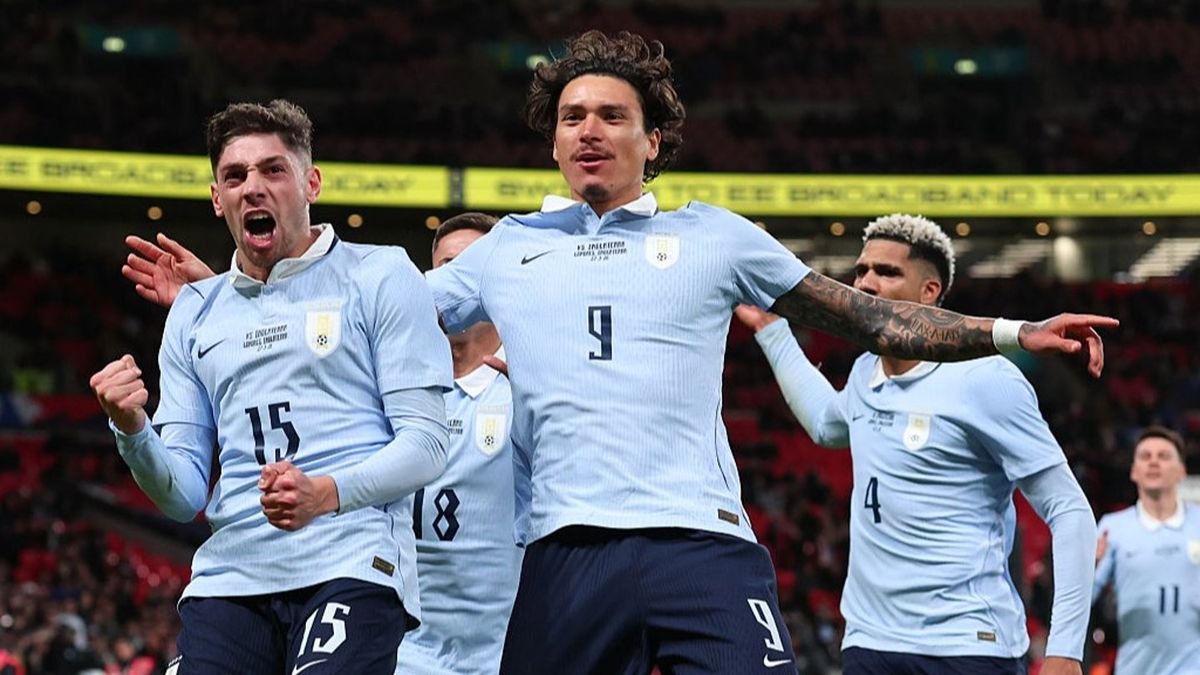
Uruguay are set to compete in their 15th FIFA World Cup™ and their fifth in a row since making a memorable return with a fourth-placed finish at South Africa 2010. After a rollercoaster qualification campaign, La Celeste clinched a direct berth in the hard-fought South American preliminaries for the FIFA World Cup 2026™.
Marcelo Bielsa’s side are undergoing wholesale changes following the retirement of key players from their recent golden generation that helped restore the nation’s reputation. With Edinson Cavani and Luis Suárez having hung up their international boots, a new-look squad led by Federico Valverde will be vying to surprise the world by showcasing their coach’s trademark tactical style.
Goalkeepers
| Player | Club |
|---|---|
| Fernando Muslera | Galatasaray |
| Sergio Rochet | Internacional |
| Santiago Mele | Atlético Junior |
Defenders
| Player | Club |
|---|---|
| José María Giménez | Atlético Madrid |
| Guillermo Varela | Flamengo |
| Ronald Araújo | Barcelona |
| Matías Viña | Flamengo |
| Mathías Olivera | Napoli |
| Joaquín Piquerez | Palmeiras |
| Santiago Bueno | Wolverhampton Wanderers |
| Sebastián Cáceres | América |
Midfielders
| Player | Club |
|---|---|
| Rodrigo Bentancur | Tottenham Hotspur |
| Nicolás de la Cruz | Flamengo |
| Maximiliano Araújo | Toluca |
| Giorgian de Arrascaeta | Flamengo |
| Manuel Ugarte | PSG |
| Brian Rodríguez | América |
| Federico Valverde (Captain) | Real Madrid |
| Agustín Canobbio | Athletico Paranaense |
| Facundo Pellistri | Panathinaikos |
| Emiliano Martínez | Midtjylland |
| Juan Manuel Sanabria | São Paulo |
| Rodrigo Zalazar | Schalke 04 |
Forwards
| Player | Club |
|---|---|
| Darwin Núñez | Liverpool |
| Rodrigo Aguirre | América |
| Federico Viñas | América |
The Coach: Bielsa’s Third World Cup
Bielsa is considered one of the world’s best coaches. Admired by many of his peers who recognise him as one of the major influences on modern football, the 70-year-old Argentinian is set to contest his third World Cup as a head coach. At Korea/Japan 2002, he endured one of the most disappointing moments of his career after crashing out in the group stage with Argentina.
He would go on to steer Chile to South Africa 2010 after they had gone 12 years without reaching the global showpiece. After progressing from the group stage – where they were only narrowly edged out 2-1 by eventual champions Spain – their journey came to an end in the Round of 16 against Brazil, who ran out convincing 3-0 winners in Johannesburg. (Source: fifa.com)
Following successful stints in club football at Athletic Club, Olympique de Marseille, and Leeds United, Bielsa returned to the international scene and has guided La Celeste to the World Cup with some superb performances during the qualifiers, albeit not without a few ups and downs along the way. In September, they swept Peru aside at the Estadio Centenario to secure their place at the 2026 edition of the global showpiece in style.
Bielsa is preparing to take a third nation to the World Cup, following spells with Argentina at Korea/Japan 2002 and Chile at South Africa 2010.
The Squad: New Era, Familiar Core
Bielsa’s Uruguay selection is punctuated by an experienced core, including Rodrigo Bentancur, José María Giménez, Fernando Muslera, and Federico Valverde. This is the first Uruguay squad since the 2002 finals not to include the nation’s all-time top scorer Luis Suárez, following his international retirement in 2024. Edinson Cavani has also hung up his boots, marking the end of an era and the beginning of a new chapter for La Celeste.
Qualification Campaign: Embracing Bielsa-Ball
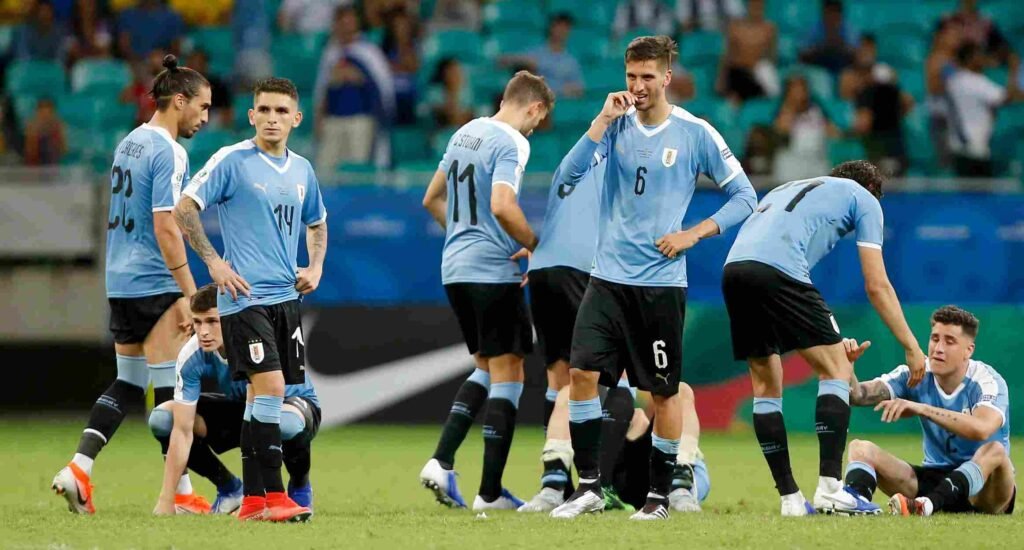
Uruguay finished fourth in the CONMEBOL qualifying standings for World Cup 2026, resulting in direct qualification. La Celeste were one of four teams to finish on 28 points, just one point below Ecuador in second place and ten points adrift of table-toppers and world champions Argentina.
Uruguay embraced ‘Bielsa-ball’ and were firing on all cylinders at the end of 2023, when they beat Brazil in Montevideo and inflicted an unexpected defeat on world champions Argentina in Buenos Aires. Despite a subsequent dip in their performance levels, they showed signs of improvement again towards the end of the qualifying campaign.
Uruguay at a Glance
| Category | Detail |
|---|---|
| Confederation | CONMEBOL |
| Best World Cup finish | Champions (1930, 1950) |
| Last World Cup | Qatar 2022 (group stage) |
| First World Cup | Uruguay 1930 |
| World Cup appearances | 15 (1930, 1950, 1954, 1962, 1966, 1970, 1974, 1986, 1990, 2002, 2010, 2014, 2018, 2022, 2026) |
| Current run of successive qualifications | Five |
| World Cup hosts | 1930 (winners) |
| Overall World Cup record | P59 W25 D13 L21 F89 A76 |
History: The Maracanazo and Glory Years
Uruguay’s first two World Cup appearances were undoubtedly their best, as they lifted the trophy in both 1930 and 1950. The country hosted the maiden edition of the tournament and went on to claim the coveted crown – a triumph they would repeat during their next World Cup appearance some 20 years later in Brazil. Their unforgettable and unexpected victory against the hosts in the final fixture left an entire nation in despair and is ingrained in international football history as the Maracanazo.
Qatar 2022 Heartbreak
Uruguay came into Qatar 2022™ with the same ambitions that took them all the way to the semi-finals in South Africa 12 years earlier. With Diego Alonso at the helm following the departure of Óscar Tabárez in 2021, La Celeste’s curtain-raiser against Korea Republic ended goalless. Following that stalemate, Portugal then dealt a heavy blow to Uruguay’s hopes of progressing with two goals from Bruno Fernandes without reply. On the final matchday, despite a 2-0 victory over Ghana thanks to a Giorgian de Arrascaeta brace, Hwang Hee-chan’s last-gasp winner against Portugal saw Korea Republic through to the knockouts at Uruguay’s expense.
1930: The First Champions
Uruguay hold the honour of being the first World Cup hosts and winners. Their 1930 tournament curtain-raiser and first-ever outing at the iconic Estadio Centenario produced a 1-0 win over Peru, before they completed their group stage with a 4-0 hammering of Romania. In the semi-finals, they eliminated Yugoslavia with a stunning 6-1 victory, which included a José Pedro Cea hat-trick. The final promised to be a showdown to remember, pitting the two powerhouses of the era against each other. Argentina edged the first half 2-1 in the Río de la Plata derby, but Uruguay fought back in the second half, scoring three goals to claim the first-ever World Cup title.
Record Holders: Míguez and Cavani
In a country that has produced plenty of prolific goal-getters over the years, Óscar Míguez remains the top scorer in Uruguay’s World Cup history, having netted eight times in the competition. The striker began his goalscoring streak with a hat-trick in Uruguay’s opening 8-0 victory over Bolivia at the 1950 World Cup, before bagging another two goals in the 3-2 win over Sweden, which preceded La Celeste’s stunning conquest of hosts Brazil in the final match. Míguez added to his haul in Switzerland four years later when he opened the scoring against Czechoslovakia and netted a brace in a 7-0 victory over Scotland. However, Uruguay’s defeat to Hungary in the semi-finals curtailed their quest for a third World Cup crown.
Selección de Uruguay para el Mundial de 2026
Nobody has featured in more World Cup matches for Uruguay than Edinson Cavani, the current Boca Juniors striker who called time on his international career in May 2024 having amassed 17 appearances at the global showpiece. That accomplishment is testament to the longevity of a striker who was a regular face on the international football scene for well over a decade. Joining Diego Forlán and Suárez as Uruguay’s third musketeer, Cavani played in all six matches at South Africa 2010, four apiece at Brazil 2014 and Russia 2018, as well as three at Qatar 2022. The 2011 Copa América champion scored five World Cup goals across those four tournaments.
The Maracanazo: Uruguay’s Finest Hour
The pinnacle of Uruguay’s World Cup history remains the decisive match of Brazil 1950, referred to as the Maracanazo. In a jam-packed Maracanã, the comeback triumph over the hosts – thanks to goals from Juan Schiaffino and Alcides Ghiggia – goes down as one of the most sensational events in international football. The Uruguay-Brazil attendance of 173,850 remains a record crowd for a World Cup game. Although that was the official figure, it is widely believed that over 200,000 were inside the Maracanã that day.
Biggest World Cup Win
Uruguay’s biggest World Cup win dates back to 1950. The eventual champions hit the ground running in that instalment by sweeping aside Bolivia 8-0 thanks to a Míguez hat-trick, a brace from Schiaffino, and one apiece from Ernesto Vidal, Julio Pérez, and the legendary Ghiggia – who would go on to score the winner in the Maracanazo.
Read More: