
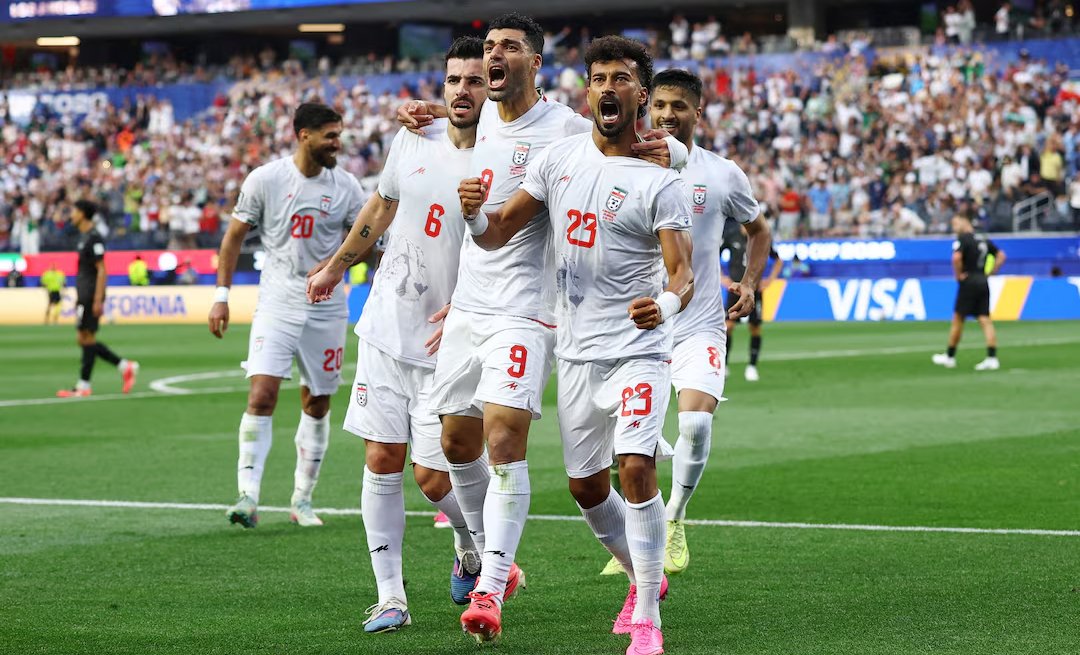
In a thrilling rollercoaster of a match at the Los Angeles Stadium, Iran and New Zealand played out an entertaining 2-2 draw that showcased the attacking ambitions of both sides. The All Whites stunned the Asian powerhouse with an early strike from Elijah Just, only for Iran to respond through Ramin Rezaeian. Just struck again to restore New Zealand’s lead, before Mohammad Mohebbi secured a dramatic equalizer for Team Melli in the second half.
The result leaves Group G tantalizingly poised, with all four teams level on points following Belgium’s draw with Egypt earlier in the day. Both Iran and New Zealand demonstrated they possess the attacking firepower to trouble any opponent, though defensive frailties were exposed at both ends.
First Half: Lightning Start and Swift Response
The match exploded into life within the opening seven minutes. New Zealand, playing with fearless intent, caught Iran’s defense napping. A swift counter-attack saw the ball worked to Elijah Just on the edge of the penalty area. The winger cut inside onto his favored right foot and unleashed a curling effort that beat Alireza Beiranvand at his near post.
New Zealand 1-0 Iran
The goal stunned the Iranian faithful, who had packed the Los Angeles Stadium in their thousands. However, Team Melli responded with characteristic resilience. Sardar Azmoun and Mehdi Taremi began to trouble New Zealand’s defense with their intelligent movement and physical presence.
The equalizer arrived in the 32nd minute through an unlikely source. A corner kick was half-cleared to the edge of the box, where Ramin Rezaeian met the ball with a perfectly struck volley that arrowed into the bottom corner. The right-back’s technique was sublime, leaving New Zealand goalkeeper Max Crocombe with no chance.
Iran 1-1 New Zealand
The remainder of the first half was an end-to-end affair. Iran enjoyed slightly more possession, but New Zealand’s counter-attacking threat remained potent. The All Whites, under the guidance of manager Darren Bazeley, showed no fear against their more fancied opponents.
Second Half: Just Strikes Again Before Iran Fight Back
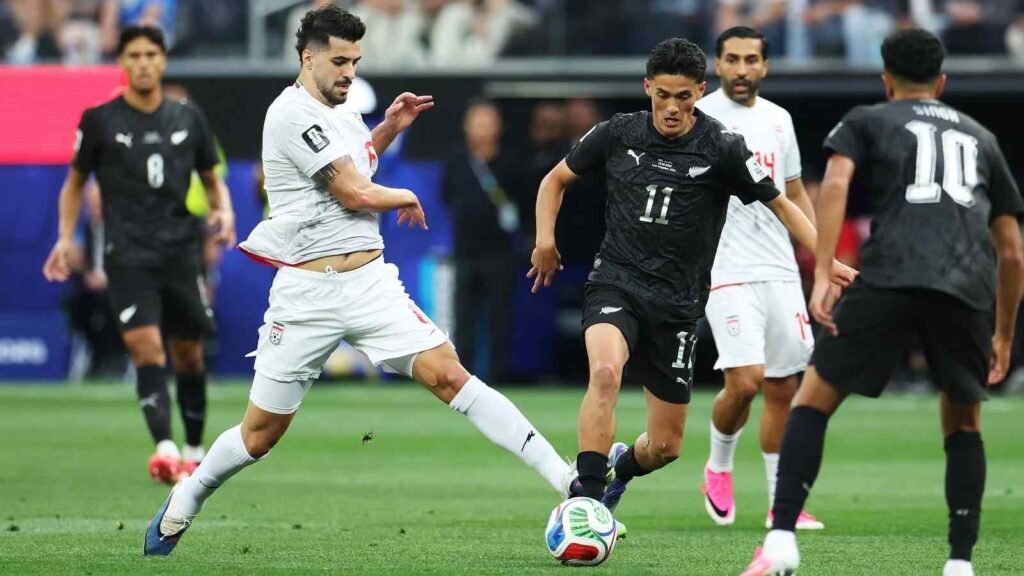
The second half began with Iran applying pressure, but New Zealand’s defensive organization held firm. The All Whites absorbed the pressure and struck decisively on the counter once again.
In the 54th minute, a flowing New Zealand move down the left flank resulted in a low cross into the box. Elijah Just, showing remarkable poacher’s instinct, arrived at the far post to slot home his second goal of the match.
New Zealand 2-1 Iran
The stadium fell silent as the New Zealand players celebrated wildly. The All Whites were now in control, and Iran faced a steep uphill battle against a side growing in confidence.
Iran refused to surrender. Manager Amir Ghalenoei made attacking substitutions, introducing Mohammad Mohebbi and Alireza Jahanbakhsh to inject fresh energy into the attack. The pressure mounted, and Iran began to create chances.
The equalizer arrived in the 64th minute. A perfectly weighted through ball from Ehsan Hajsafi split the New Zealand defense, and Mohammad Mohebbi raced onto it. The substitute showed composure beyond his years, slotting the ball past Crocombe to make it 2-2.
Iran 2-2 New Zealand
The final 25 minutes were frenetic. Both sides pushed for a winner, with Iran’s attacking trio of Taremi, Azmoun, and Mohebbi causing constant problems. New Zealand responded with dangerous counter-attacks, with Just twice coming close to completing his hat-trick.
In the 78th minute, Iran thought they had scored the winner when Taremi’s header from a corner was brilliantly saved by Crocombe. The rebound fell to Azmoun, but his shot was blocked on the line by a desperate New Zealand defender.
At the other end, Beiranvand was forced into a stunning save in the 85th minute, tipping a long-range effort from Matthew Garbett around the post. The final whistle brought relief to both sets of players, who had given everything in a match that could have gone either way. (Source: FIFA)
Match Statistics
| Category | IR Iran | New Zealand |
|---|---|---|
| Possession | 43% | 45% |
| Possession Contest | 12% | 12% |
| Total Shots | 17 | 14 |
| Shots On Target | 4 | 8 |
| Shots Off Target | 7 | 3 |
| Corners | 6 | 2 |
| Yellow Cards | 1 | 0 |
| Red Cards | 0 | 0 |
| Fouls | 10 | 8 |
| Offsides | 2 | 0 |
| Own Goals | 0 | 0 |
Goals Scorer
| Scorer | Team | Minute |
|---|---|---|
| Elijah Just | New Zealand | 7′ |
| Ramin Rezaeian | Iran | 32′ |
| Elijah Just | New Zealand | 54′ |
| Mohammad Mohebbi | Iran | 64′ |
Passing & Distribution
| Category | Iran | New Zealand |
|---|---|---|
| Total Passes | 417 | 448 |
| Passes Completed | 333 | 378 |
| Pass Completion % | 80% | 84% |
| Crosses | 18 | 11 |
| Crosses Completed | 4 | 2 |
| Cross Completion % | 22% | 18% |
| Switches of Play Completed | 4 | 1 |
Card Summary
| Player | Team | Card | Minute |
|---|---|---|---|
| Ahmad Nourollahi | Iran | 🟨 | 42′ |
Shot Efficiency Comparison
New Zealand were significantly more clinical with their chances, converting 8 of 14 shots on target (57%) compared to Iran’s 4 of 17 (24%). Elijah Just’s two goals came from just 4 attempts.
Possession Battle
Possession was remarkably balanced, with New Zealand holding a marginal edge at 45% to Iran’s 43%. The 12% contested possession indicates a fiercely competitive midfield battle. Neither side dominated the ball, resulting in an open, transitional game.
Defensive Line Vulnerability
Iran successfully completed 15 defensive line breaks from 24 attempts (63%), exposing New Zealand’s high defensive line. Conversely, New Zealand completed just 3 defensive line breaks from 8 attempts (38%), suggesting Iran’s defensive organization was more disciplined in denying space in behind.
Receptions Behind Defensive Lines
Iran received the ball 17 times behind New Zealand’s defensive line, compared to just 3 for New Zealand. This statistic highlights Iran’s success in exploiting space in behind, a key factor in their two goals.
Crossing Inefficiency
Both sides struggled with crossing accuracy. Iran completed just 4 of 18 crosses (22%), while New Zealand completed 2 of 11 (18%). This inefficiency contributed to the open nature of the game, as both teams were forced to build through the center.
Pressing and Turnovers
Iran forced 44 turnovers (27 + 17) compared to New Zealand’s 30. However, both teams were relatively equal in their defensive intensity, with foul counts of 10 and 8 respectively.
Post-Match Reactions
Amir Ghalenoei (IR Iran Head Coach):
“It was a difficult match against a very organized New Zealand side. Elijah Just is a special player, and he caused us problems all night. But I am proud of my team’s character. We fell behind twice and fought back twice. The equalizer was well-deserved. We created many chances and could have won the game. We must improve our defensive concentration, but there are many positives to take.”
Darren Bazeley (New Zealand Head Coach):
“I am incredibly proud of the performance. To come to the World Cup and score twice against Iran, who are ranked 20th in the world, is a great achievement. Elijah Just was outstanding. We showed we can compete at this level. The defensive lapses for their goals were disappointing, but overall, it was a fantastic team effort.”
Elijah Just (New Zealand, Two Goals):
“Scoring twice in a World Cup match is a dream come true. The first goal was special, but the second gave us the lead. I thought we would hold on, but Iran showed great character. A point is a good result for us. We go again in the next match.”
Mehdi Taremi (IR Iran Forward):
“We had enough chances to win two matches. Their goalkeeper made some great saves, and our finishing let us down. But we showed the spirit of Team Melli. We never gave up. New Zealand are a tough opponent, and we respect them. We will learn from this and be better in the next game.”
Tactical Analysis
Iran’s Attacking Approach
Iran’s 4-2-3-1 formation allowed Taremi and Azmoun to combine effectively. The full-backs, Rezaeian and Mohammadi, provided width and overlapping runs, creating overloads in wide areas. Hajsafi’s role as a floating playmaker was crucial, with his movement creating space for the attackers.
New Zealand’s Counter-Attacking Threat
The All Whites’ disciplined defensive shape invited Iran onto them before springing devastating counters. Just and Waine’s pace on the flanks caused constant problems. Their 75% line break success rate (108 from 144 attempts) shows how effectively they bypassed Iran’s press to transition quickly.
Defensive Frailties
Both sides were vulnerable on set-pieces. Iran’s goal came from a corner, highlighting New Zealand’s weakness in defending aerial balls. Iran’s defense was caught offside just twice but was undone by New Zealand’s intelligent movement in behind.
Substitutions Impact
Mohammad Mohebbi’s introduction at halftime was transformative. His movement and finishing ability added a new dimension to Iran’s attack, culminating in the equalizer. For New Zealand, the substitutions of Ryan De Vries and Kosta Barbarouses added fresh legs but couldn’t prevent Iran’s equalizer.
Conclusion: Points Shared, Lessons Learned
Iran 2-2 New Zealand was a match that had everything—early goals, a fightback, drama, and controversy. Both teams demonstrated the quality and fighting spirit required to succeed at the World Cup.
For Iran, the result represents a missed opportunity. They dominated large portions of the match and created enough chances to win. However, defensive lapses and wasteful finishing cost them two points. Team Melli remains a formidable force, but they will need to address their defensive concentration if they are to progress from Group G.
For New Zealand, the draw is a statement result. The All Whites, making their third World Cup appearance, showed they can compete with Asia’s elite. Elijah Just’s emergence as a world-class talent is a major positive. With two matches remaining, New Zealand will believe they can qualify for the knockout stages for the first time in their history.
Group G is now one of the most open groups in the tournament. All four teams are level on points, separated only by goal difference. Belgium and Egypt will face Iran and New Zealand in what promises to be a fascinating conclusion to the group stage.
The World Cup continues to deliver drama, excitement, and unforgettable moments. Iran and New Zealand provided a classic encounter that will be remembered for years to come.
FIFA World Cup 2026 Match Schedule & Group Table are here.