
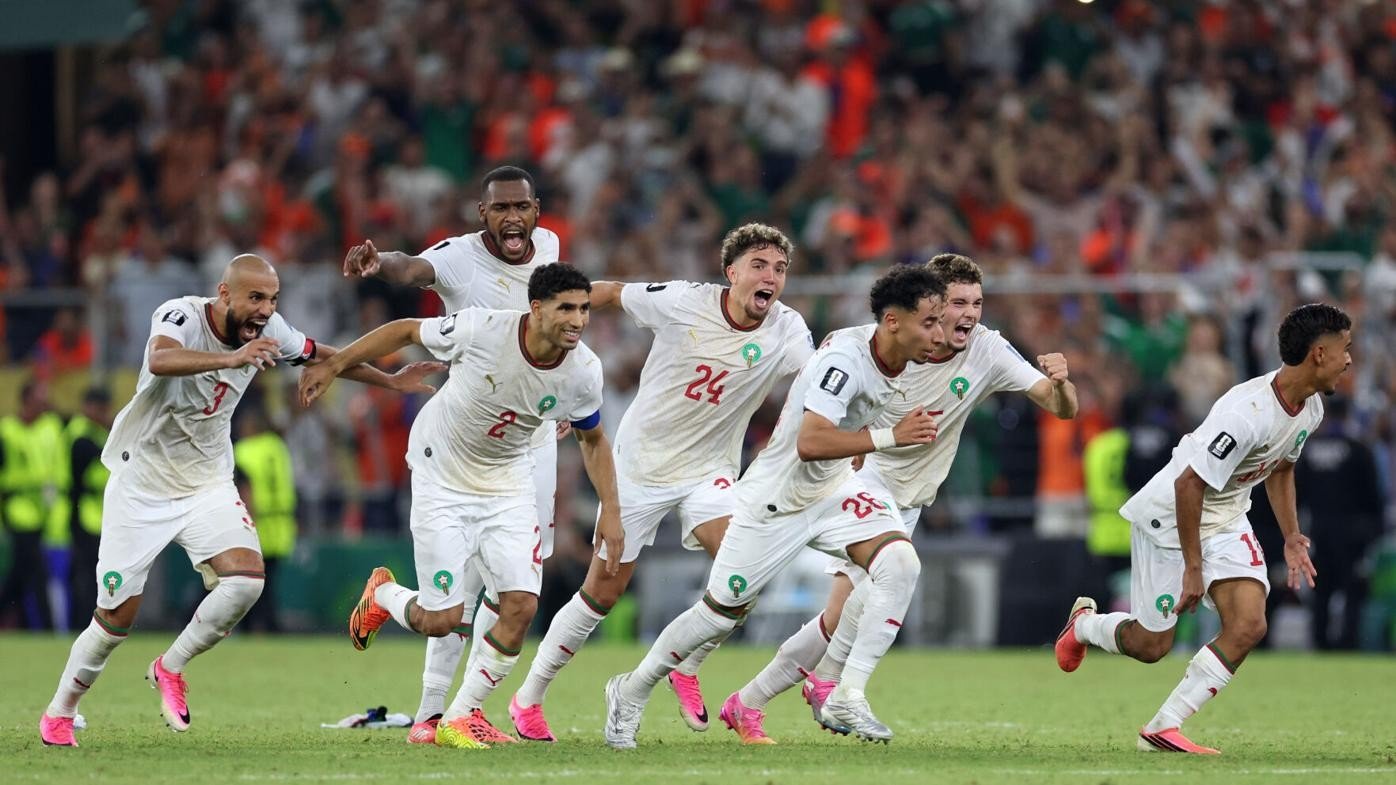
FIFA World Cup 2026™ – Round of 32, June 29, 2026, In a night that will be etched into African football folklore forever, Morocco produced one of the greatest upsets in World Cup history, eliminating the Netherlands in a dramatic penalty shootout following a 1-1 draw. The Atlas Lions, who dominated possession and created twice as many chances as their illustrious opponents, held their nerve from the spot to secure a 3-2 shootout victory and book their place in the Round of 16.
The match at Boston Stadium was a tactical masterclass from Morocco, who completely outplayed the Dutch in every aspect of open play. Despite the Netherlands taking an early second-half lead through Cody Gakpo, Morocco’s relentless pressure finally paid off with a stoppage-time equalizer from I. Diop, before the Atlas Lions showcased their mental fortitude in the shootout.
First Half: Morocco’s Possession Dominance
From the very first whistle, it was clear that Morocco had no intention of sitting back against the European giants. The Atlas Lions took control of the midfield and never relinquished it, completing 720 passes compared to the Netherlands’ meager 290. Their 70% possession statistic was not merely defensive passing—it was purposeful, progressive football that constantly probed the Dutch defense.
Morocco created eight clear chances in the match, double the Netherlands’ four. Their attacking intent was evident in their eight corners to the Dutch’s five, and their six shots off target demonstrated their willingness to take risks in the final third. The Moroccan midfield, anchored by the impressive B. El Khannouss and later replaced by C. Talbi, dictated the tempo of the game with remarkable composure.
The Netherlands, by contrast, appeared shell-shocked. Their usual fluid passing game was stifled by Morocco’s high press and intelligent positional play. The Dutch managed just one shot on target throughout the entire match, a statistic that underscores just how thoroughly they were outplayed. Their 30% possession was their lowest in any competitive match in over a decade.
Second Half: Gakpo Breaks the Deadlock
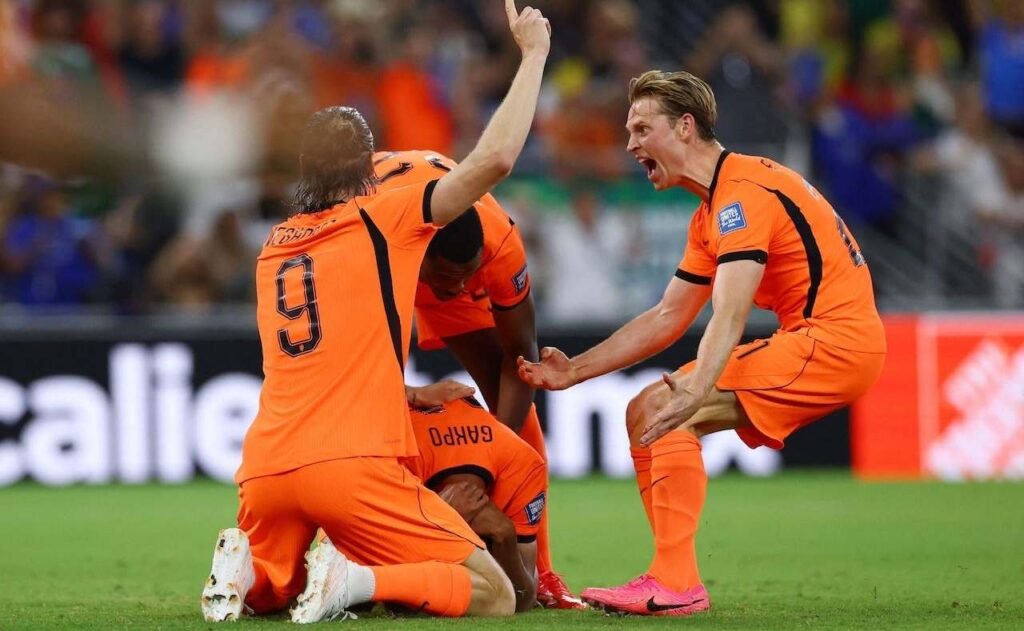
The breakthrough came in the 72nd minute, against the run of play. Cody Gakpo, the Netherlands’ most dangerous attacker, found space in the Moroccan penalty area and coolly finished to give the Dutch a 1-0 lead. It was a classic sucker punch Morocco had dominated for over 70 minutes, yet found themselves trailing.
Dutch manager Ronald Koeman made immediate changes, introducing Wout Weghorst and Teun Koopmeiners in the 71st minute, hoping to secure the victory. The substitutions, however, did little to stem the Moroccan tide. The Atlas Lions continued to pour forward, their belief undiminished by the deficit.
Morocco responded with a flurry of substitutions of their own, introducing fresh legs in attack. S. El Mourabet and G. Yassine entered the fray in the 79th minute, adding renewed energy to the Moroccan assault. The pressure was relentless, and the Dutch defense, despite their numerical superiority in defensive positions, began to crack.
Match Statistics
| Category | Netherlands | Morocco |
|---|---|---|
| Ball Possession | 30% | 70% |
| Passes | 290 | 720 |
| Offsides | 3 | 0 |
| Chances Created | 4 | 8 |
| Shots On Target | 1 | 4 |
| Shots Off Target | 4 | 6 |
| Shots Blocked | 4 | 2 |
| Shots Saved | 5 | 2 |
| Free Kicks | 15 | 18 |
| Fouls | 18 | 15 |
| Tackles | 15 | 13 |
| Corners | 5 | 8 |
| Yellow Cards | 1 | 0 |
| Red Cards | 0 | 0 |
Dramatic Equalizer in Stoppage Time
| Time | Scorer | Nationality |
|---|---|---|
| 72′ | C. GAKPO | Netherlands |
| 90+1′ | I. DIOP | Morocco |
As the clock ticked into stoppage time, Morocco’s persistence finally bore fruit. In the 91st minute, I. Diop rose highest in a crowded penalty area to power a header past the Dutch goalkeeper. The stadium erupted as the Atlas Lions had finally gotten the goal their performance deserved. It was a moment of pure ecstasy for the Moroccan supporters, who had watched their team dominate for 90 minutes.
The equalizer sent the match into extra time, where both teams had chances to snatch a winner. Morocco created the better opportunities, but the Dutch defense, despite being overwhelmed for most of the match, held firm. The Netherlands introduced J. Kluivert and M. De Roon in extra time, but they couldn’t break down a Moroccan side that was growing in confidence.
Penalty Shootout Drama
| Netherlands | Result | Morocco | Result |
|---|---|---|---|
| T. Koopmeiners | ✅ | S. Rahimi | ✅ |
| J. Kluivert | ❌ | N. El Aynaoui | ❌ |
| W. Weghorst | ✅ | I. Saibari | ✅ |
| Q. Timber | ❌ | C. Talbi | ✅ |
| C. Summerville | ❌ | A. Hakimi | ❌ |
The shootout was a nerve-shredding affair that tested the mental strength of both teams. Teun Koopmeiners stepped up first for the Netherlands and coolly dispatched his penalty, putting the Dutch ahead 1-0. Morocco’s S. Rahimi responded with equal composure, leveling the scores at 1-1.
Then came the turning point. Dutch substitute J. Kluivert, brought on specifically for his penalty-taking ability, saw his spot-kick saved by the Moroccan goalkeeper. It was a catastrophic miss that shifted the momentum entirely in Morocco’s favor. The Atlas Lions’ N. El Aynaoui then missed his penalty, keeping the scores level at 1-1 heading into the third round.
Wout Weghorst scored for the Netherlands, and I. Saibari responded for Morocco, making it 2-2. Then came the decisive moment. Q. Timber stepped up for the Dutch with the score at 2-2, but his penalty was saved spectacularly by the Moroccan keeper. C. Talbi then stepped forward and calmly slotted home to give Morocco a 3-2 lead with just one Dutch penalty remaining.
The pressure was immense on C. Summerville, who needed to score to keep the Netherlands alive. He stepped up, took a deep breath, but his effort sailed agonizingly wide. The penalty shootout was over. Morocco had won 3-2. The Moroccan players collapsed in a heap of joyful exhaustion while their Dutch counterparts stood frozen in disbelief.
Analysis: A Tactical Masterclass
This result represents a seismic shift in the balance of power in world football. Morocco’s performance was not a fluke it was a tactical masterclass that exposed the Netherlands’ vulnerabilities. Their 70% possession, 720 completed passes, and eight chances created were not just statistical anomalies; they were the product of a perfectly executed game plan.
Morocco’s ability to control the midfield, press effectively, and create high-quality chances against a traditionally strong European side demonstrates the progress African football has made on the world stage. The Atlas Lions’ victory in the shootout, despite missing one of their penalties, shows the mental resilience that has become the hallmark of this Moroccan generation.
What This Means Going Forward
For Morocco, this victory ranks among the greatest in their footballing history, arguably surpassing their famous 2022 World Cup run. It represents a statement of intent the Atlas Lions are no longer satisfied with merely participating; they want to challenge for the biggest prizes.
For the Netherlands, this is a catastrophic failure. A team that reached the semifinals of the 2022 World Cup and was expected to challenge for the title in 2026 has crashed out in the first knockout round. Questions will inevitably be asked about Ronald Koeman’s tactics, the team’s preparation, and the future direction of Dutch football.
Morocco advances to the Round of 16 with momentum and belief. The Atlas Lions have shown they can compete with and defeat the best teams in the world. For the Netherlands, the long road back to glory begins with difficult questions that must be answered before the next major tournament.